
Free quote by phone, 24/7 · We speak English
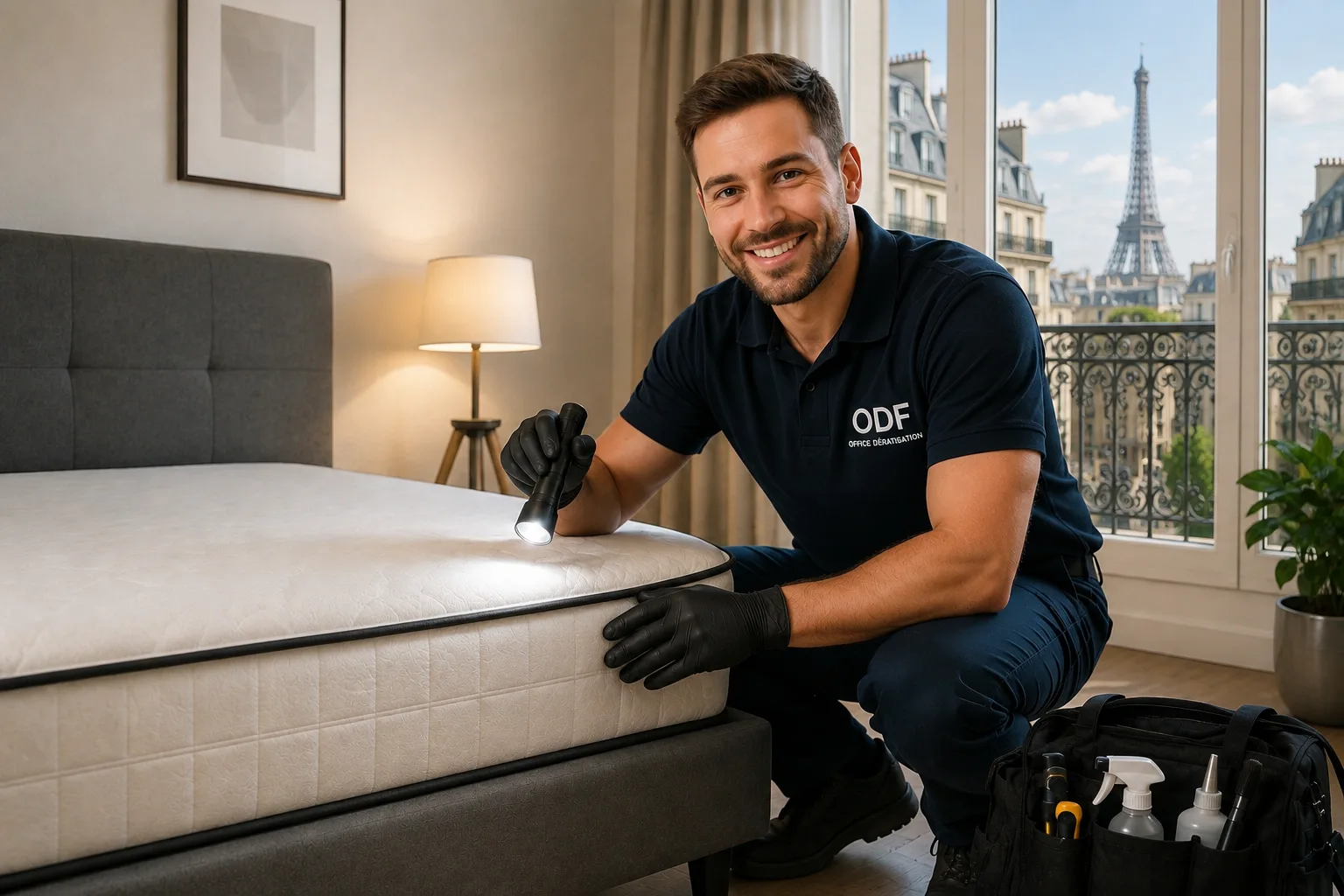
Bed bug treatment in Paris, in English —
same-day intervention, followed through until the bugs are gone.
Bites in a line, black dots on the mattress seams, a landlord who says it’s your problem: we deal with all of it. Certibiocide-certified technicians, dry steam at 180 °C or a chemical protocol depending on your situation, a written report and an invoice in English, and six months to call us back if anything reappears. Free quote by phone, 24/7.
 Ministerial certificationCertibiocide · French Republic
 Certibiocide-certifiedReasoned treatments
 French companyLocal technicians, Paris and Île-de-France
For expats, visitors, hosts and hotels
Pest control you can actually talk to — in English
Getting bed bugs is bad enough. Explaining them in a language you don’t speak, to a company that answers between two French calls, is worse. Here is how we work with English-speaking clients in Paris.
Who calls us: expats settling into a rental, students in a studio, visitors bitten in a holiday apartment, Airbnb hosts between guests, hotel and hostel managers, HR departments relocating staff, property managers with an English-speaking tenant.
The Paris situation
Are bed bugs still a problem in Paris in 2026? Yes — and it has nothing to do with cleanliness
Bed bugs never left. The autumn 2023 headlines about bed bugs on the metro came and went; the insects stayed, in Paris as in every large city with a lot of travel and a lot of second-hand furniture. The reference figures come from the French health and safety agency, Anses: 11 % of French households were infested at least once between 2017 and 2022, and the agency states plainly that the presence of bed bugs has no link with the cleanliness of a home, nor with income.
Two Anses findings matter if you are new to the city. Almost 40 % of infestations start with a stay in a hotel or holiday rental, and around 20 % with second-hand furniture or clothes — the two things a newcomer to Paris does most. And in 16 % of cases the home was already infested when the new occupants moved in, which is exactly the situation French tenancy law was amended for (see who pays below).
Bed bugs do not transmit disease. They bite at night, the bites itch, sleep goes, and anxiety follows. A female lays five to fifteen eggs a day, so a problem that is small in week one is not small in week six. The good news, also from Anses: two thirds of infested households are rid of the bugs within two months when the treatment is done properly.
Recognising an infestation
How to tell it’s bed bugs — the four signs
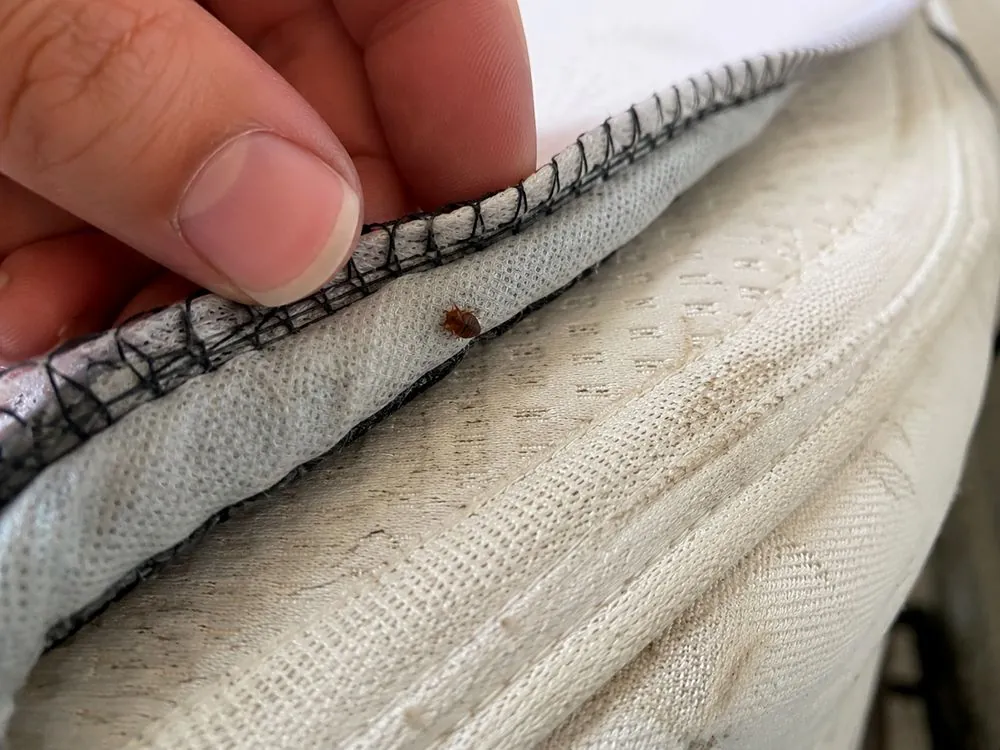
Bed bugs are the size of an apple seed, flat, reddish-brown, and nocturnal. You will rarely see one. You will see what they leave behind.
Often in a line or a cluster of three or four, on skin left uncovered at night: arms, legs, neck, face, shoulders. Reactions vary; about one person in four shows no mark at all, which is why a couple can disagree about whether “there is something”.
Small red-to-brown dots on the sheets or pyjamas, from a bug crushed after feeding.
Black dots about 1 mm across, grouped in mattress seams, on the bed frame, behind the headboard, on skirting boards or behind wallpaper.
Translucent, rounded casings near the hiding places: a bed bug moults five times on its way to adulthood.
If you have bites but none of the other three signs, the cause may be something else (mosquitoes, fleas from a pet, dermatitis). Send us photos of what you found: it is free, and we will tell you honestly whether it looks like bed bugs.
Where they hide
Where bed bugs hide in a Paris apartment
They stay warm, dark and as close as possible to the person they feed on — which means the bed first, then everything within a few metres of it.
- Mattress and box spring: seams, piping, buttons, zips, the underside.
- Headboard, pillows, duvet, bed linen.
- Bedside tables and chests of drawers: drawer runners, screw holes, books, alarm clocks.
- Skirting boards, parquet joints, behind wallpaper and mouldings — common in older Haussmann buildings.
- Light switches, sockets, wall boxes, ceiling roses.
- Carpet near the bed, sofas and armchairs, pet baskets and cushions.
A treatment that only covers the mattress misses most of that list. That is why an ODF visit begins with a full inspection of the room, not a spray around the bed.
Our methods
Dry steam at 180 °C, chemical treatment or whole-room heat: which one you need, and why
We practise all three. None of them is magic, each has a job it does better than the others, and each has limits we would rather state than hide. The choice depends on how far the infestation has spread, who lives in the home, and how quickly you need to sleep in your own bed.
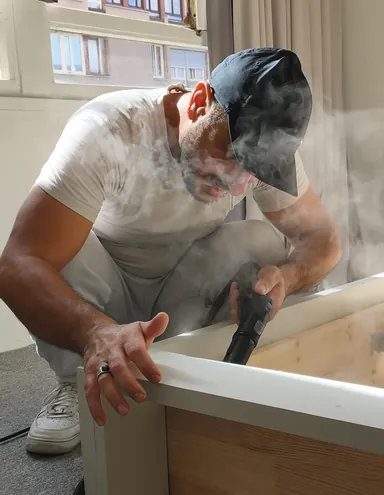
Dry steam — eco-friendly, no chemicals
Very hot, very dry steam projected under pressure onto every infested surface. Adults, nymphs and eggs die on contact.
- Kills the eggs, not only the adults
- No product, no smell, nothing to evacuate
- About six hours on site; you sleep at home the same night
A professional generator projects the steam onto mattress seams and buttons, box spring, headboard, skirting boards, parquet joints and sofas. Nothing is deposited, and the room can be used again as soon as the surfaces are dry — the method we recommend for homes with babies, pregnant women, people with respiratory sensitivity or pets, and the only one that treats a mattress or a sofa without making it unusable. Its limit, stated plainly: steam has no residual effect. A bug that was not reached survives, and steam does not go inside a wall or behind a socket. Its result depends on the thoroughness of the technician, so every steam job at ODF comes with a full inspection and a follow-up: if bugs reappear, we come back.
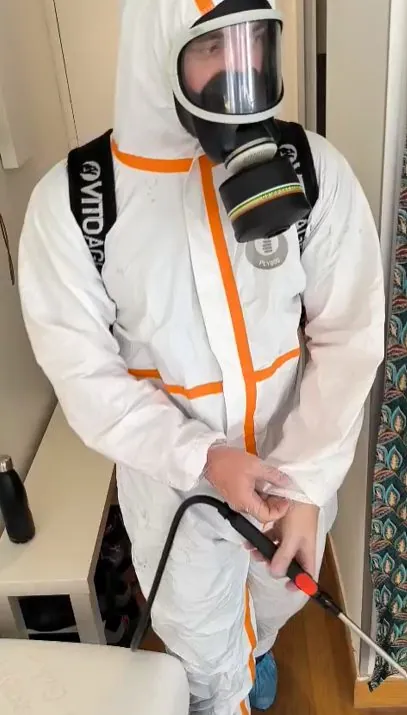
Chemical treatment — residual, in two visits
Authorised insecticides applied by a Certibiocide-certified technician on the bugs’ routes and refuges, with a second visit about fourteen days later.
- Reaches the deep hiding places
- Keeps working for weeks after the visit
- The right answer when several rooms or the neighbours are affected
The strength of a biocidal insecticide holding a French marketing authorisation is its residual action: it keeps working for weeks on insects that leave their hiding places after the visit, and it reaches what steam cannot — inside skirting boards, behind sockets, deep cracks. Its weakness: insecticides have little effect on eggs. That is why a serious protocol always has two visits about fourteen days apart, the second one killing the nymphs hatched in between, before they can lay eggs of their own. Between the two visits you follow a written protocol (laundry washed at 60 °C, dried and sealed in bags); after each application you stay out of the treated rooms for a few hours — the technician tells you how long. Resistance to the commonest insecticide families is documented in bed bugs, so we choose products; we do not spray blind.
Whole-room heat treatment — on request
Heaters bring the whole room or apartment to 50–55 °C for several hours, monitored with probes. Everything is treated at once, eggs included, without any product.
- Everything in one go, eggs included, no product
- Six to seven hours; the home must be vacated for the whole duration
- Offered up to 60 m² — beyond that, heat no longer rises evenly and we say so
The probes are placed where heat penetrates last — inside the mattress, in solid furniture — so that no point of the volume stays below the lethal threshold. It treats what is impossible to steam one by one: bookshelves, piles of clothes, toys, electronics that tolerate heat. It is also the most demanding of the three: heavy equipment, fragile items to move out, the home unavailable for the day, and the highest price. Price on quotation.
Which one for you — five common cases.
- Recent bites, traces limited to the bed → dry steam alone is often enough, with a check-up a few weeks later.
- Bugs in several rooms, or in a neighbour’s flat → the infestation is established: a residual protocol, possibly combined with steam on the bed.
- Baby, vulnerable person or pet, recent infestation → dry steam first; chemical remains possible with the re-entry delays respected.
- Hundreds of objects to treat, refusal of any product → the typical case for whole-room heat, up to 60 m².
- In every case → no supermarket spray before we come: it scatters the bugs and hides the evidence. And do not throw your mattress out before asking: most of the time it can be treated.
On the ground, “steam or chemical?” is often the wrong question: steam removes what is visible and reachable, eggs included; the residual product waits for the ones that come out later. Depending on the diagnosis, our technicians steam the bed and treat the surrounding refuges with product, or use one method alone when it is enough. What never changes is the follow-up: the job is not finished until the bugs are gone.
On a phone, the table scrolls sideways.
How a job goes
What happens from your call to the follow-up visit
Diagnosis
By phone, then on site. You describe what you found — photos help. We tell you which method fits, what it costs and when we can come. The quote is free by phone or from photos; if a diagnostic visit is needed before any treatment, it is charged, and you know the price beforehand.
Treatment
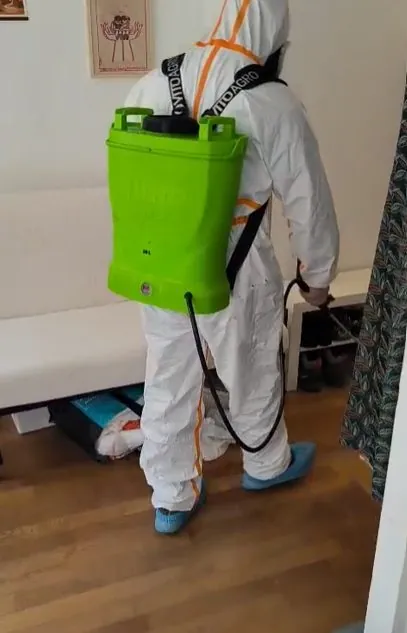
The technician inspects the whole room, then treats at the source: dry steam, chemical, or both, according to the diagnosis. He explains what he is doing and why. After the first visit you receive the written protocol — and the report in English if you need it.
Follow-up
A check-up visit, prevention advice, and six months to call us back. For a chemical protocol, the second visit comes about fourteen days after the first, once your laundry has been washed at 60 °C, dried and sealed in bags.
Six-month guarantee
After a treatment, you have six months to report any reappearance. If our technician confirms the presence of the pest during the check-up visit, an additional visit is carried out at no charge — see the conditions below.
Before we come: do less than you think. Do not move the mattress, do not empty the wardrobe, do not vacuum “to help”: moving things spreads the bugs into the rest of the home and destroys the evidence the technician needs. Leave everything as it is. The only useful thing you can do is take photos.
Prices
How much does bed bug treatment cost in Paris? Our real prices
These are the prices our technicians actually charge in Paris and Île-de-France, confirmed before any visit — no surprise when the technician arrives.
Chemical treatment — two visits included
Dry steam at 180 °C — eco-friendly, no insecticide
One main steam visit is enough in most cases; a check-up visit may be scheduled according to the terms of your quote. Whole-room heat treatment (up to 60 m²) is quoted case by case. In French terminology, a T2 is a two-room flat — one bedroom plus a living room; a T3 has two bedrooms, a T4 three.
What makes the price vary: the surface and number of rooms; the level of infestation (a recent presence is quick, a colony settled for months needs a heavier protocol — acting early is also paying less); the method; the layout (heavily furnished flats, old buildings with service ducts); private home or business (restaurants, food shops and hotels have specific hygiene and discretion constraints, quoted separately).
Home insurance? In the vast majority of cases, no: standard French home insurance excludes pests. A few premium contracts include capped assistance — check your policy; our invoice in English is accepted by insurers when there is cover.
Full price list, including rodents and cockroaches: our prices page (in French).
Who pays
Tenant or landlord — who pays for bed bug treatment in France?
In most rentals, the landlord. Since the ELAN law of 23 November 2018 (article 142), article 6 of the French tenancy law of 6 July 1989 requires the landlord to provide a decent home, expressly defined as “free of any infestation of pests and parasites”. In practice this means:
- In a rented flat, the landlord bears the treatment unless they can prove the infestation results from the tenant’s own negligence — a proof that is very hard to bring for bed bugs, which travel in luggage and second-hand furniture and settle in clean and dirty homes alike.
- In the common parts of a building (cellars, ducts, rubbish rooms), the syndic — the building manager — must act.
- When bugs circulate between several apartments, a coordinated treatment of the building is the only lasting solution; we regularly work for syndics and property managers in that setting.
- In a furnished holiday rental or hotel, it is the host’s or the hotel’s responsibility, not yours. Report it in writing, keep photos, and read “I found bed bugs in my hotel or Airbnb” in the questions below.
Whatever your situation: document (dated photos, a note of when the bites started), notify your landlord or agency in writing (email is fine, registered letter if they stall), and get a written, itemised quote. Ours can be issued in the landlord’s or the syndic’s name, and our report and invoice come in English, so the discussion starts on solid ground.
Sources: loi n° 2018-1021 (ELAN) quoted on the French Ministry of Ecological Transition’s bed bug page; service-public.fr — links in the Sources section.
Hosts and hotels
Treating between two check-ins
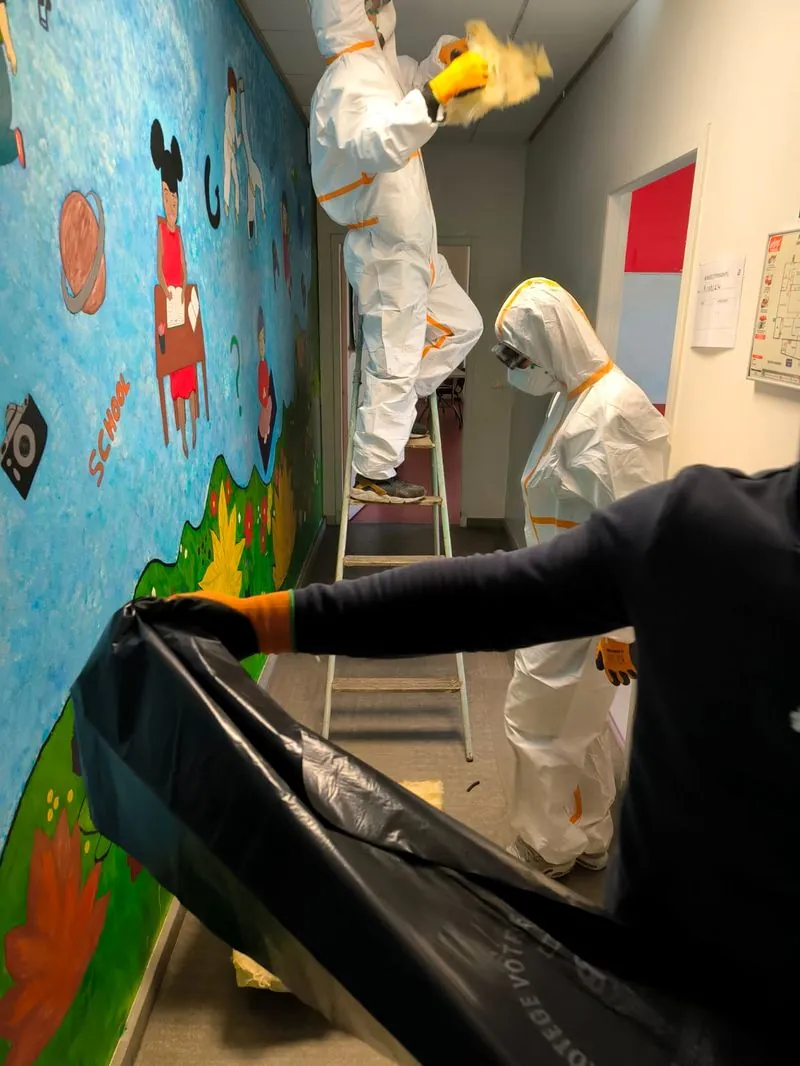
For a host, a single bad review mentioning bed bugs costs more than the treatment. We work with short-term rental owners, concierge companies, hotels and hostels in Paris on that basis: a slot between two check-ins, unmarked vehicles and neutral clothing, dry steam so the room is usable as soon as it is dry, and a dated report in English you can keep on file or forward to a platform if a guest raises a claim. For recurring properties we set up a prevention routine: inspection of beds and headboards at each turnover, mattress encasements, an inspection protocol for your cleaning team.
Where we work
Paris, the inner suburbs and Île-de-France — and the French Riviera
Our technicians are based in Les Lilas, on the eastern edge of Paris, and cover all twenty arrondissements — each has its own page, in French — the neighbouring towns of Seine-Saint-Denis (Les Lilas, Bagnolet, Pantin, Montreuil, Romainville, Le Pré-Saint-Gervais, Noisy-le-Sec, Bobigny) and the rest of Île-de-France. Our southern base covers Draguignan, Fréjus, Cannes, Nice and Monaco (pages in French).
Reviews
What our clients say
What clients say
★★★★★ 4.9/5 — 188 reviews on Google





“Fast and very effective. The technician was professional, competent and reassuring, and took the time to explain the situation.”
“Great service, discreet and careful work. Problem solved quickly, with good advice to stop it happening again.”
“Exemplary responsiveness, from the first call to the end of the visit. Effective and reassuring. Nothing to fault.”
“Very professional and punctual. You can feel the experience. I highly recommend them for any pest problem.”
“Punctual and pleasant — thank you for a reassuring and effective visit.”
“Fast and very effective. The technician was professional, competent and reassuring, and took the time to explain the situation.”
“Great service, discreet and careful work. Problem solved quickly, with good advice to stop it happening again.”
“Exemplary responsiveness, from the first call to the end of the visit. Effective and reassuring. Nothing to fault.”
“Very professional and punctual. You can feel the experience. I highly recommend them for any pest problem.”
“Punctual and pleasant — thank you for a reassuring and effective visit.”
15 questions English speakers ask us
Bed bugs in Paris: your questions, answered
Are bed bugs still a problem in Paris in 2026?
What are the first signs of bed bugs in a Paris apartment?
Will bed bugs go away on their own, or if I shower and change the sheets?
How fast do bed bugs spread between apartments in a Paris building?
What kills bed bugs instantly — does heat really work?
Heat treatment or chemical treatment: which one do I need?
How long does the treatment take, and do I have to leave my home?
Do I need to throw away my mattress, bed or clothes?
How should I prepare my flat before the technician arrives?
Is the treatment safe for children, pregnant women and pets?
How much does professional bed bug treatment cost in Paris?
Who pays for bed bug treatment in France — the tenant or the landlord?
I found bed bugs in my hotel room or Airbnb in Paris — what should I do?
Can bed bugs be completely eliminated? What does your six-month guarantee cover?
Do you speak English, and can you provide a report and invoice in English for my landlord or insurance?
Still have a question? Call 01 55 86 37 26 — we answer in English. For the biology of the insect and our French guides: bed bug guide, steam vs chemical vs heat comparison and 90 questions on bed bugs (in French).
References
Official sources
The health and legal information on this page relies on institutional publications, consulted in September 2026.
Anses, “Bed bugs in 13 questions” (English, October 2023): 11 % of French households infested between 2017 and 2022; almost 40 % of infestations after a stay in a hotel or holiday rental, around 20 % after second-hand purchases, 16 % of homes already infested at move-in; five to fifteen eggs a day; no disease transmission; two thirds of households rid within two months; non-chemical methods to be favoured; Certibiocide certificate required for professional insecticide use. Anses, “Punaises de lit : des conséquences sur le budget et la qualité de vie des Français” (in French, 2023): the Ipsos–Anses survey behind those figures.
Ministère de la Transition écologique, “Punaises de lit ? L’État vous accompagne” (in French): quotes loi n° 2018-1021 (ELAN) — the landlord must provide a decent home “exempt de toute infestation d’espèces nuisibles et parasites”; official portal stop-punaises.gouv.fr and the government housing helpline 0806 706 806 for legal questions on who pays (in French). Service-public.fr, “Punaises de lit : tout savoir pour s’en débarrasser” (in French, 2023). Ville de Paris, “Tout savoir sur les punaises de lit” (in French).
Bed bugs in your Paris apartment? Tell us what you found
A certified technician calls you back in English and comes as soon as possible — usually the same day in Paris and the inner suburbs. Free quote by phone or from your photos; six-month guarantee with the conditions above.
📞 +33 1 55 86 37 26Quick answer · No obligation · Same-day visits
Office Dératisation France · 33 Rue Jean Moulin, 93260 Les Lilas
01 55 86 37 26 · Paris · Île-de-France · SIREN 881 072 912 · RCS Bobigny