
Free quote by phone, 24/7 · We speak English
Rats or mice in your Paris apartment?
English-speaking pest control, same-day visits, followed through until they are gone
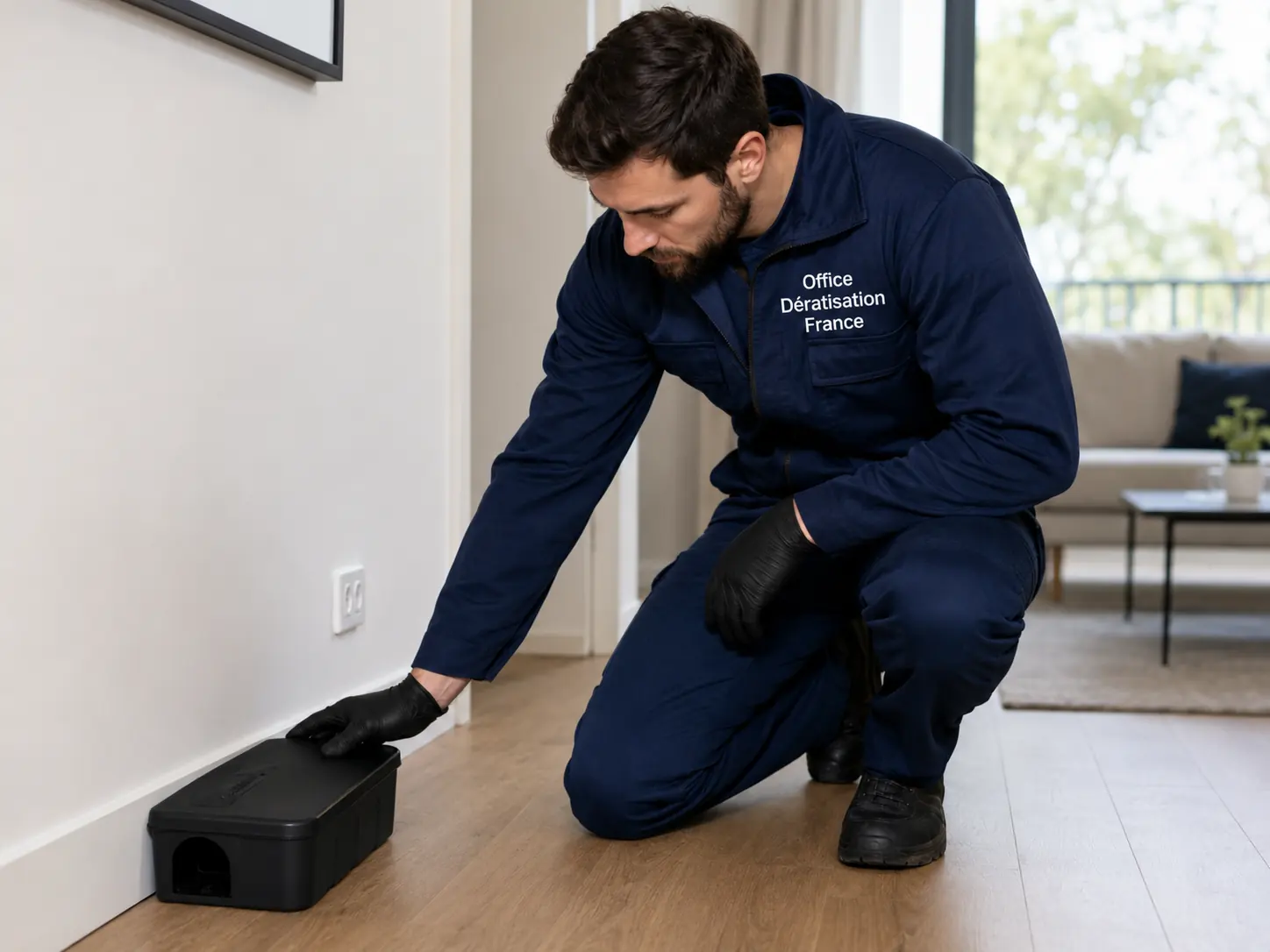
Scratching in the wall at night, black droppings in a kitchen drawer, a chewed bag of rice: we deal with it, in English. Certibiocide-certified technicians, secured bait stations where rodents run along the floor and contact treatment inside the walls and ceilings when they run through the structure, a written report in English for your landlord or agency, and six months to call us back. Free quote by phone, 24/7.
 Ministerial certificationCertibiocide · French Republic
 Certibiocide-certifiedReasoned treatments
 French companyLocal technicians, Paris and Île-de-France
For expats, tenants, hosts and businesses
Rodent control you can actually talk to — in English
A mouse in a Paris kitchen is ordinary. Explaining it to your landlord, your syndic and a pest control company, all in French, while the scratching goes on every night, is what turns ordinary into exhausting. Here is how we work with English-speaking clients:
Who calls us: tenants who heard something in the wall, expats who found droppings behind the cooker the week they moved in, Airbnb hosts warned by a guest, restaurant and shop managers, property managers with an English-speaking tenant, HR departments housing relocated staff. Bites rather than droppings? See our bed bug treatment in Paris page.
Rat or mouse? It changes everything
Is it a rat or a mouse? Three ways to tell — and why the answer decides the treatment
Most people who call us say « rat » when they have mice, and the difference is not cosmetic: the two species do not live in the same places, do not eat the same way and are not treated with the same protocol. Three checks settle it in a minute.
| House mouse (Mus musculus) | Rat — brown rat (Rattus norvegicus) or black rat (Rattus rattus) | |
|---|---|---|
| Size | 6–10 cm without the tail | 15–25 cm without the tail, 110–340 g |
| Droppings | Black, rice- or sesame-grain sized, scattered everywhere, 50–80 a day | Olive-shaped, 10–20 mm, grouped along the same runs |
| Where | Kitchens, cupboards, behind appliances, inside partition walls and false ceilings, any floor | Cellars, courtyards, ground floors, ducts and drains for the brown rat; attics and roof spaces for the black rat |
| Noise | Light scratching and scurrying in the walls or ceiling at night | Louder gnawing and scratching, mostly at ground level |
| Gnaw marks | Two parallel grooves 1–2 mm apart on packaging, furniture, cables | Deep marks on wood, plastic, cables, even concrete edges |
On a phone, the table scrolls sideways.
Mice are what most Paris apartments get. They squeeze through a gap the width of a pencil, nest within a few metres of food and reproduce fast; a single mouse seen is rarely a single mouse living there. They colonise the structure — hollow partitions, false ceilings, service ducts — which is why you hear them above your head and never see them.
Rats in a Paris home usually mean the brown rat coming up from the drains, cellars or a courtyard: a ground-floor flat, a restaurant back room, a building with an old sewer connection. The black rat, a climber, is rarer and nests high up. A rat problem is a building problem more often than an apartment problem, and the syndic is usually part of the solution (see « Who pays? » below).
Not sure? Send us a photo of the droppings: it is free, and it is usually enough to tell.
The Paris situation
Why rodents are part of living in Paris — and why the private side of the wall is yours to deal with
Paris has an old, dense, continuous underground: sewers, cellars, metro tunnels, service ducts, and Haussmann buildings whose partition walls, floors and chimney flues connect one flat to the next. The City of Paris has run an integrated rodent control plan since 2017 and carries out more than 7,000 interventions a year on public land — streets, parks, squares. That figure is the city’s own.
What the plan does not cover is the private side of the wall. Under the Règlement sanitaire départemental, keeping courtyards, cellars, common parts and private premises free of rodents is the owner’s obligation. In practice: the pavement outside is the city’s job; your building’s cellar is the syndic‘s; your apartment is your landlord’s or yours. Nobody comes on their own — someone has to call.
Two more facts shape how we work. In 2022 the French health and safety agency, Anses, recommended ending self-service sales of all rodenticides to the general public, because of documented resistance in rodent populations and accidental poisonings; professional products are reserved for certified technicians, used only against a confirmed infestation, in locked stations, and removed at the end of the treatment. And rats are the main reservoir of leptospirosis, a bacterial disease transmitted through their urine — usually mild in humans but occasionally severe — which is why a wet cellar or a flooded basement with rats is treated as a health matter, not just a nuisance (Institut Pasteur, see Sources).
Recognising an infestation
How to tell you have rodents — five signs, in the order you usually notice them
Both species are nocturnal and shy. You will hear and find things before you see an animal.
Scratching, scurrying or gnawing in a partition wall, above a false ceiling, under the floor, behind the kitchen units. For mice it is the first sign in most calls we take; for rats it is louder and lower.
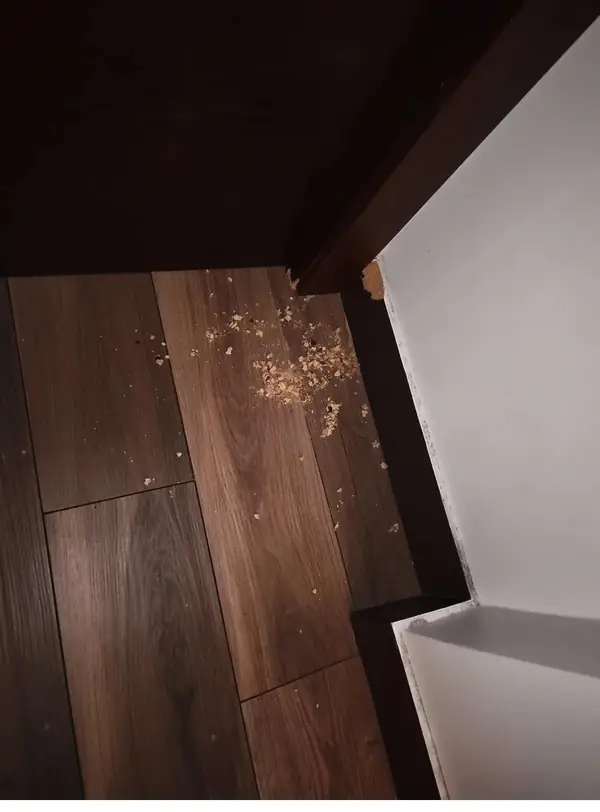
Mice: black grains scattered in drawers, along skirting boards, on shelves, behind appliances — dozens a day, so they appear fast. Rats: bigger, grouped on the runs they use.
Chewed packaging, a hole in a bag of flour or dry pet food, shavings at the foot of a door, damaged cables — rodents’ incisors never stop growing, so they gnaw to wear them down.
A urine smell, stronger in confined spaces; the stronger it is, the larger the population. Rats add a musky note; they navigate by it.
Dark smears along the bottom of walls and around holes, where the same animals pass night after night with the same greasy fur. Rats hug the walls; that is where the technician starts looking.
Seeing a mouse in daylight is a sign of numbers, not of boldness: it means the nest is crowded enough to push individuals out at odd hours.
Where they hide
Where mice and rats live in a Paris apartment building
Warm, dark, close to food and out of sight — for mice that means the kitchen and the structure around it:
- Behind and under appliances: fridge, cooker, dishwasher, washing machine.
- Kitchen cupboards and drawers, and the void behind the kick-boards under the units.
- Hollow partition walls, false ceilings and service ducts — the « motorways » between flats.
- Around pipe entries under the sink, behind the skirting boards, along the risers.
- Cellars, storage rooms, garages and attics that nobody visits.
Rats add the ground: cellars and caves, courtyards, bin rooms, drains and old sewer connections, the back of a ground-floor shop and, for the black rat, roof spaces.
A treatment that only puts a bait station in the kitchen corner misses the place the animals actually live. That is why an ODF visit starts by finding the runs — where they come from and where they go — not by putting products where the client saw the mouse.
Our methods
Floor or structure? Our two methods, and which one your situation needs
The single most useful question we ask on the phone is: do you see traces on the floor, or do you hear them in the walls and ceiling? The answer decides the method, the time on site and the price. Most Paris apartments need both.
Method 1 — Secured bait stations on the runs
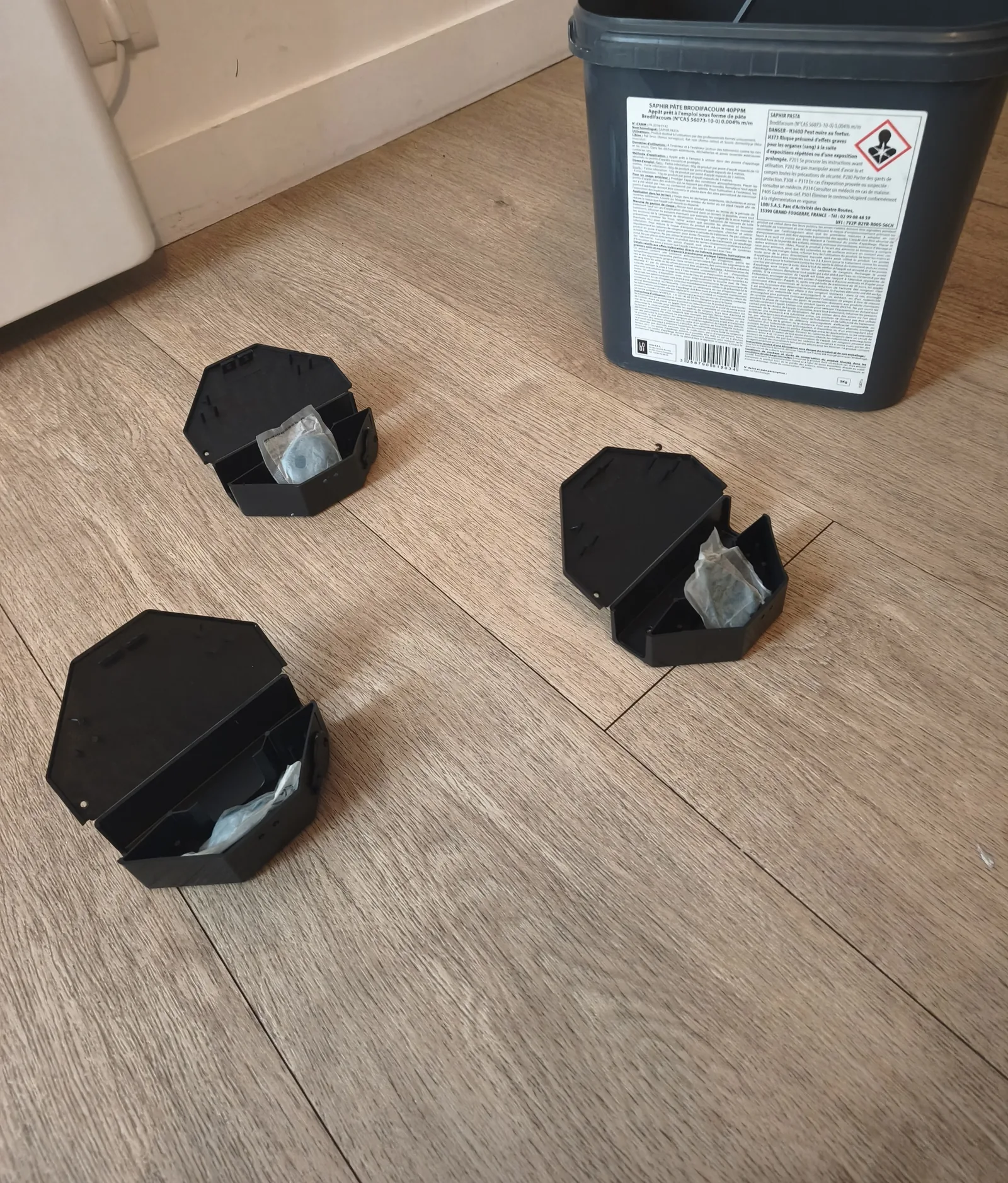
Locked, tamper-resistant stations placed where rats and mice actually travel: along the walls, behind furniture, under the kitchen units, across the cellar. Professional rodenticides holding a French marketing authorisation, dosed for the species and the level of infestation.
- Never loose bait, never within reach of a child or a pet
- Checked at the follow-up visit, removed at the end of the treatment
- Mechanical traps on the same runs where products are not wanted
French rules do not allow permanent baiting « just in case », and neither do we: the stations are there for the duration of a confirmed infestation, then they go. In food businesses, or when a client refuses any product, we work with mechanical traps on the same runs.
Method 2 — Contact treatment in walls and ceilings
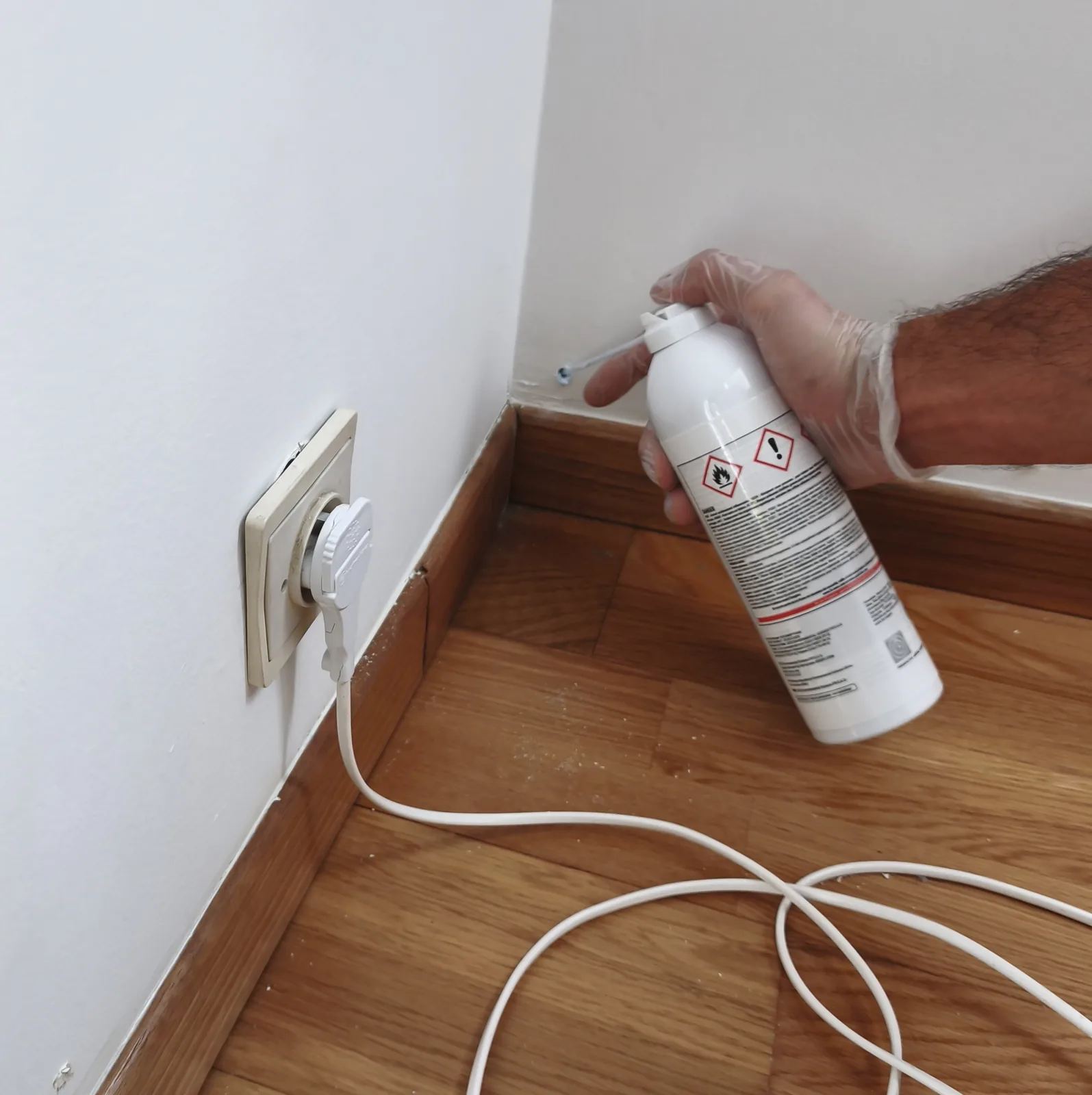
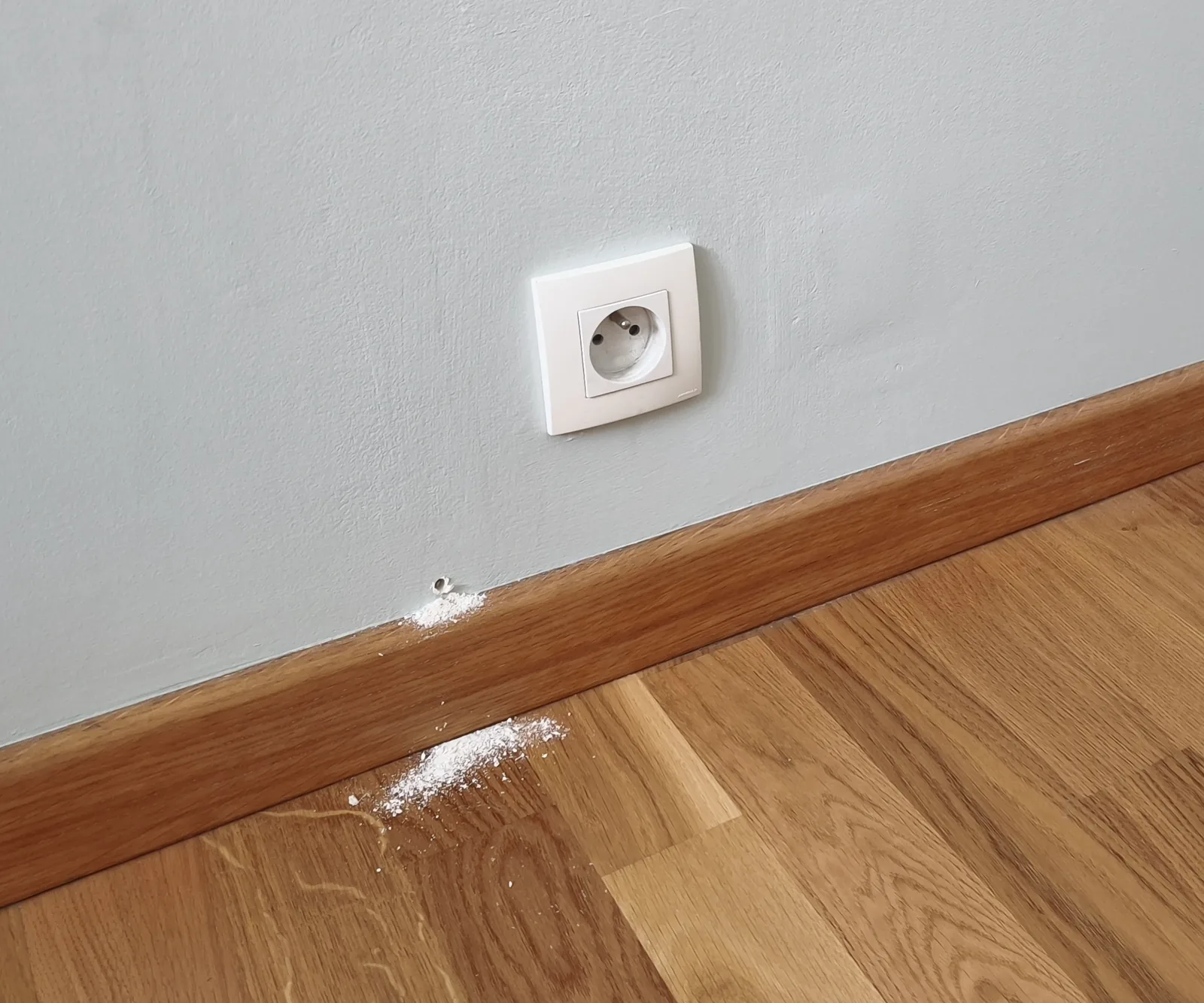
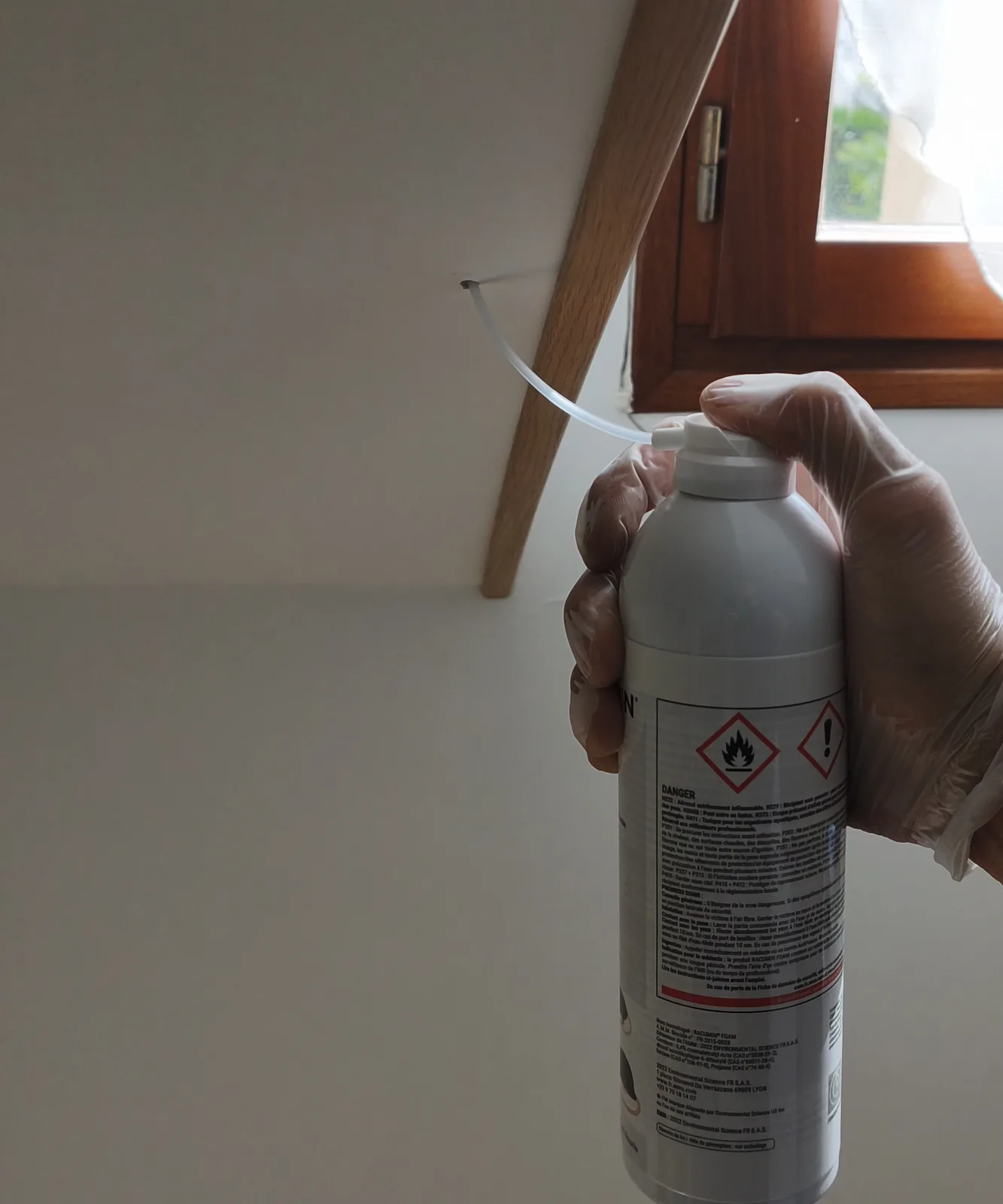
When you hear them above the ceiling or inside a partition, stations on the floor never reach them. We drill 5 mm holes where the runs were located and inject a contact rodenticide — a foam or paste — directly into the void.
- Every animal on the run picks the product up on its fur and ingests it while grooming
- Reaches a colony no trap would reach; holes invisible once filled
- Priced per linear metre of injection, after the runs are mapped
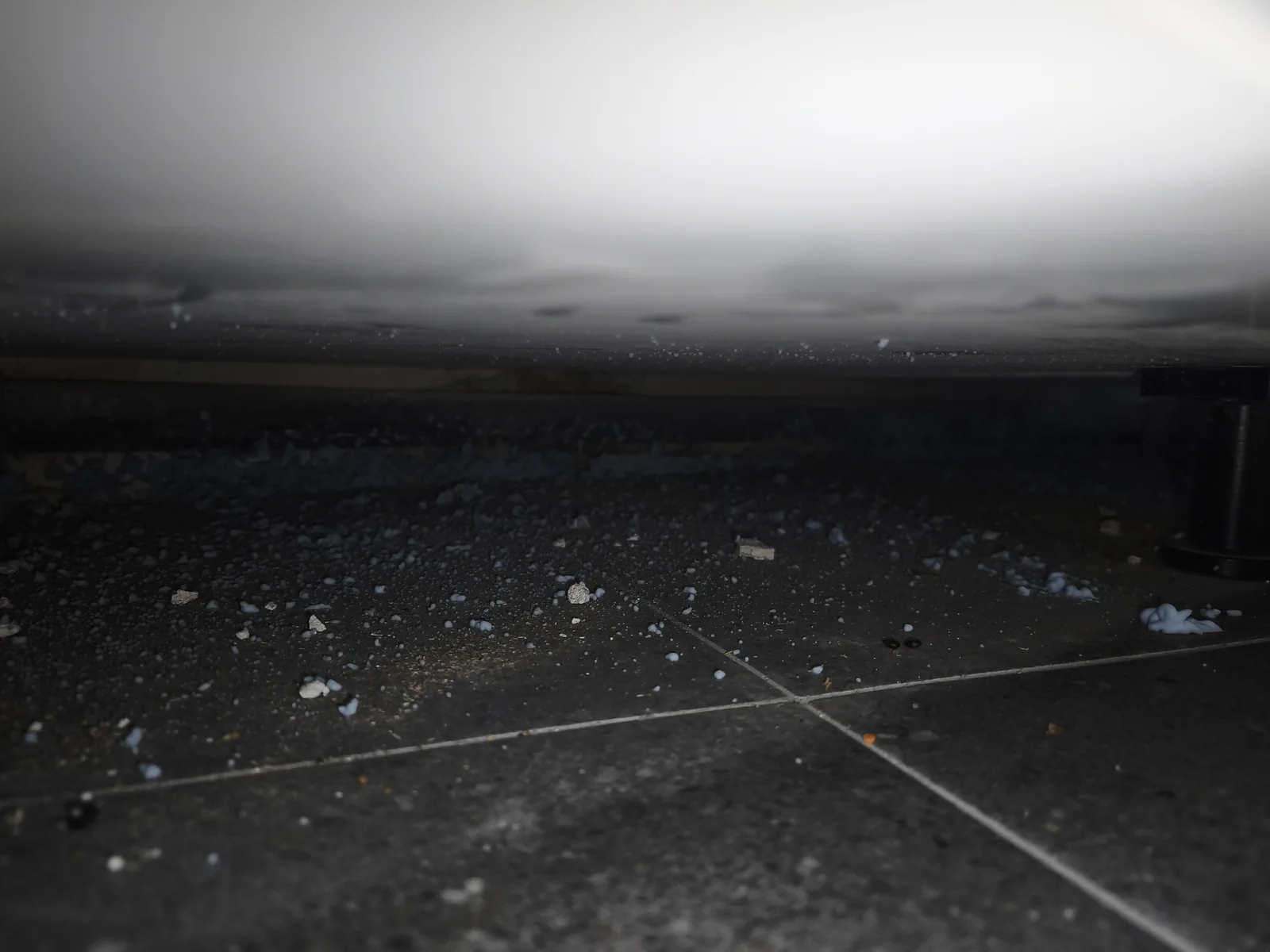
That is the principle of forced consumption: the product does not need to be eaten as bait, it only needs to be crossed. It is how we treat a school’s false ceilings, a bedroom partition in Romainville or the void under a kitchen in Paris 17e — see the photos below.
And after: sealing the way in. A treatment that leaves the entry points open is a treatment you will pay for again. At the end of the visit the technician shows you where they get in — the gap around a pipe under the sink, the bottom of a cellar door, a broken air-brick — and seals it (steel wool, mortar, mesh) or tells you and your syndic exactly what to fix when the work is the building’s.
Which one for you — four common cases
- Droppings in the kitchen, nothing heard in the walls → floor method, a few stations on the runs, follow-up visit.
- Scratching in a partition or above the ceiling → structure method, injection on the mapped runs; stations on the floor as a complement.
- Rats in the cellar or courtyard, a shop or restaurant back room → floor method with heavier stations, a look at the drains and a word with the syndic: the source is usually outside your four walls.
- A short-term rental between two guests, an office, a school → both where needed, everything locked and out of reach, and a dated report you can keep on file.
What never changes: we treat the source, not the sighting, and the job is not finished until the follow-up visit confirms that the activity has stopped.
On the ground
Three recent rodent jobs in Paris and the inner suburbs, with photos
Real visits, real photos, no client names.
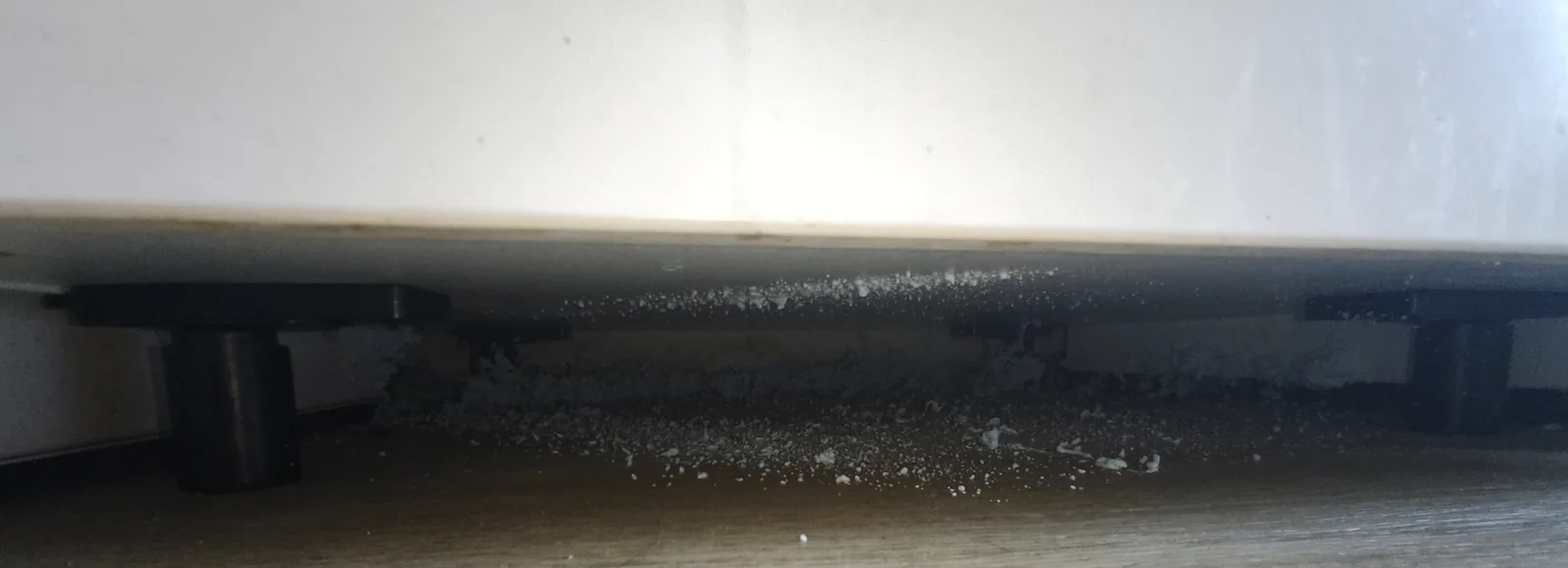
Mice in a short-term rental, Paris 17e (September 2026). A host warned by a guest. Droppings and passage marks under the kitchen units, nothing in the bedrooms. Three locked bait stations on the runs — one wedged behind the fridge — and contact rodenticide foam applied under the units where the animals actually travelled, out of any guest’s reach. The flat was back on the platform for the next check-in.
Mice inside the partition walls, Romainville (September 2026). The client heard them every night in a bedroom wall. Runs mapped with a torch and by ear, 5 mm holes drilled at the right points along the skirting, contact rodenticide foam injected into the void and under the roof slope, holes filled. Nothing visible the next morning except the silence.
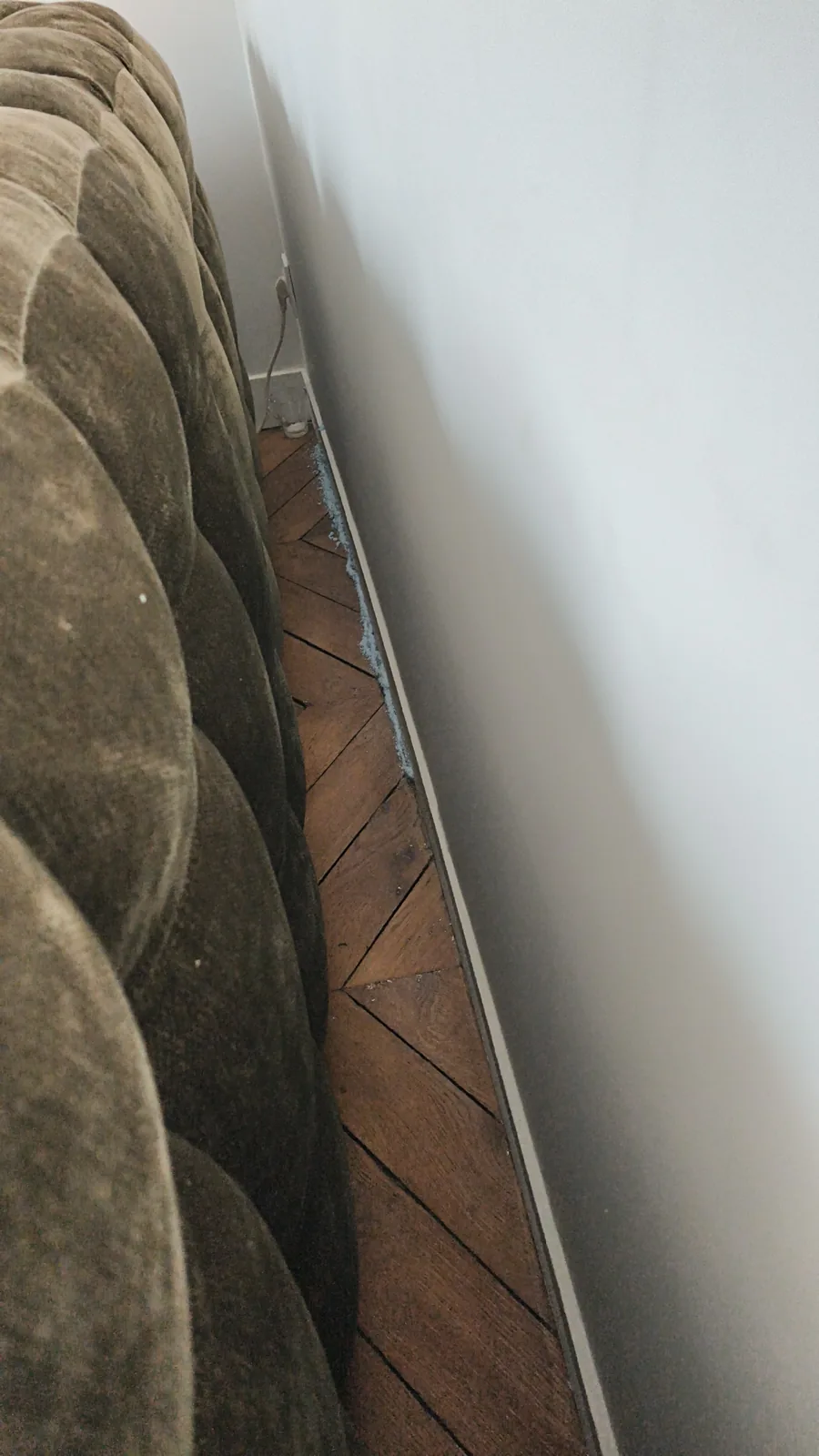
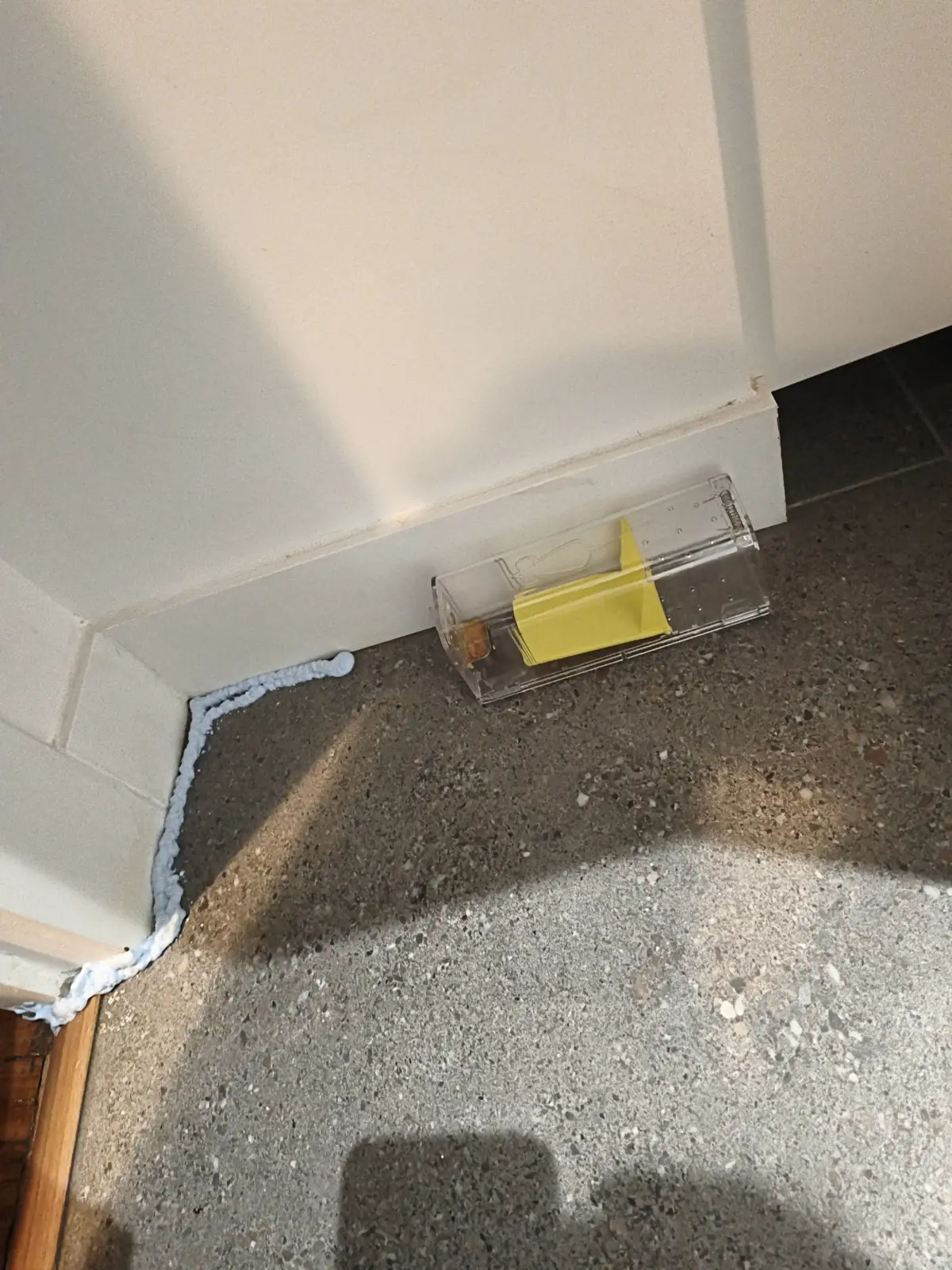
Mice in a flat in the Marais, Paris 4e (September 2026). Classic kitchen infestation in an old building: droppings under the kitchen unit, and a shop-bought catch trap that had caught nothing in three weeks. Contact treatment laid as a cordon along the skirting boards and room corners on the mapped runs, stations under the units, follow-up two weeks later.
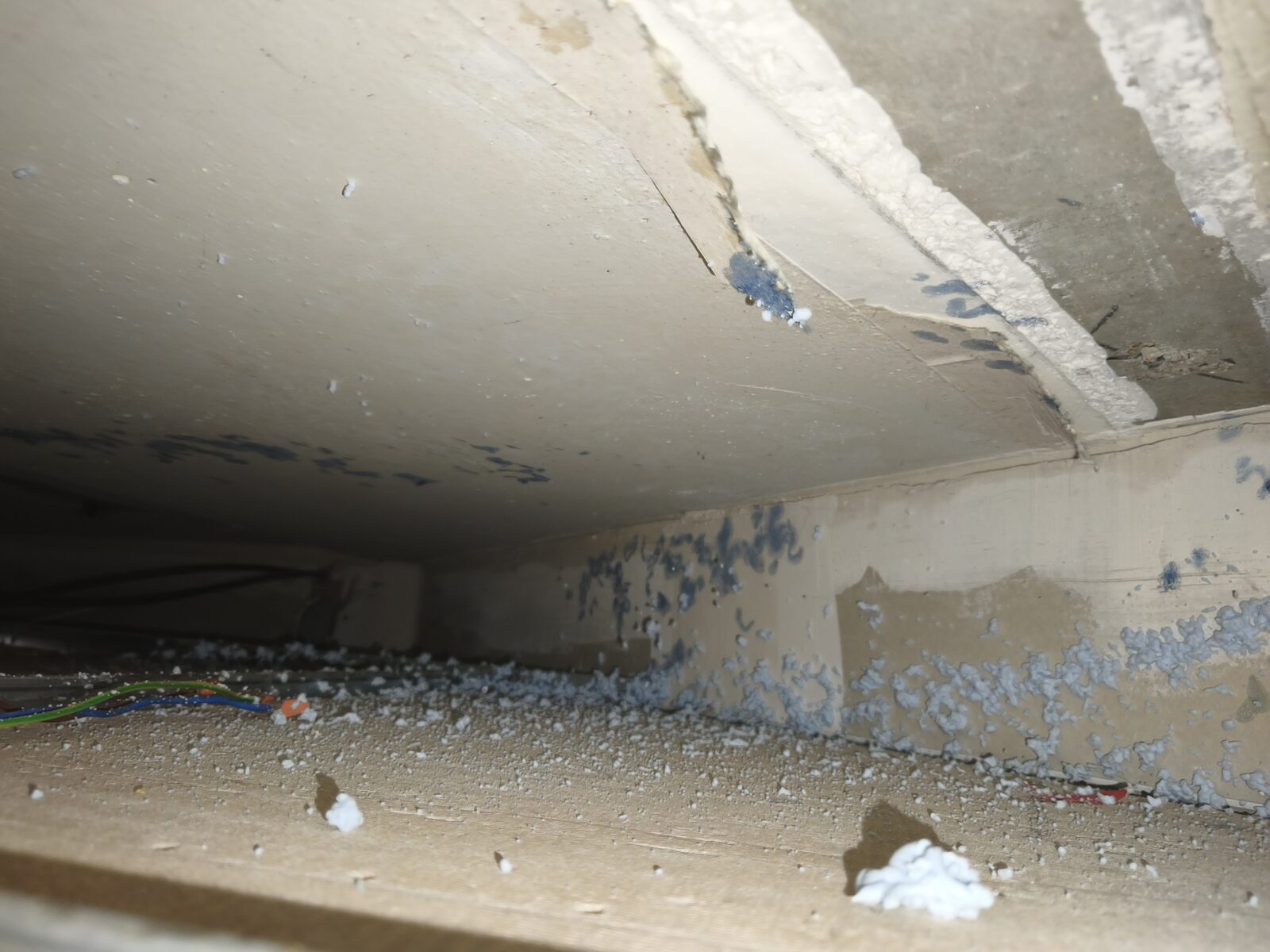
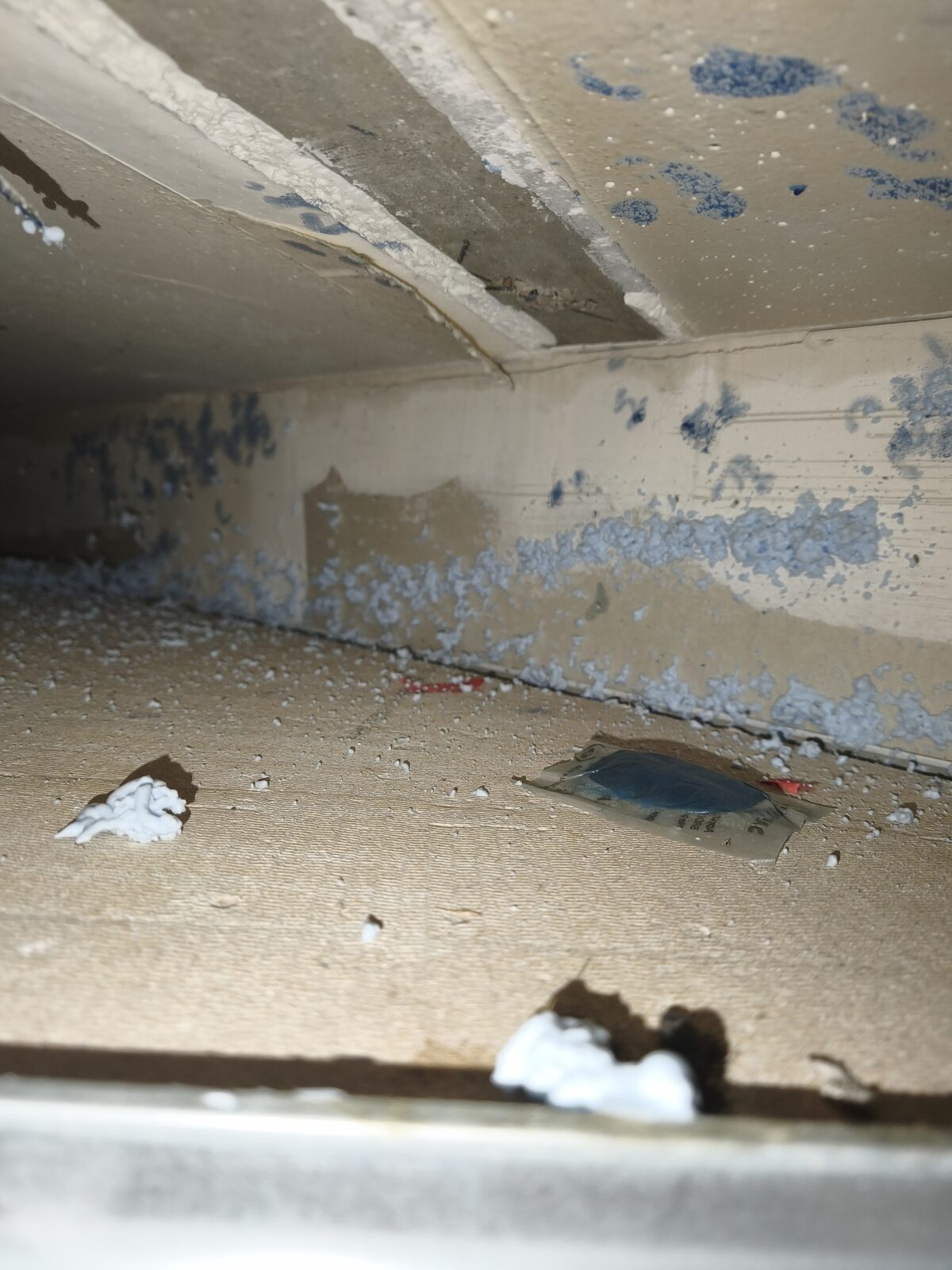
And a school we look after under contract. Mice had settled in the false ceilings, where nobody ever goes. Treatment inside the plenum — blue contact rodenticide on the runs, secured bait sachets — with stations around the perimeter outside, all of it out of the children’s reach. That is what a maintenance contract buys: we know the building, and we treat the right place.
And the smallest job of all, Noisy-le-Sec. One mouse seen, one worried client, one visit: three locked stations on the runs and contact product under the kitchen units, out of the children’s reach, invoiced €240. She offered the technician a coffee.
How a job goes
What happens from your call to the follow-up visit
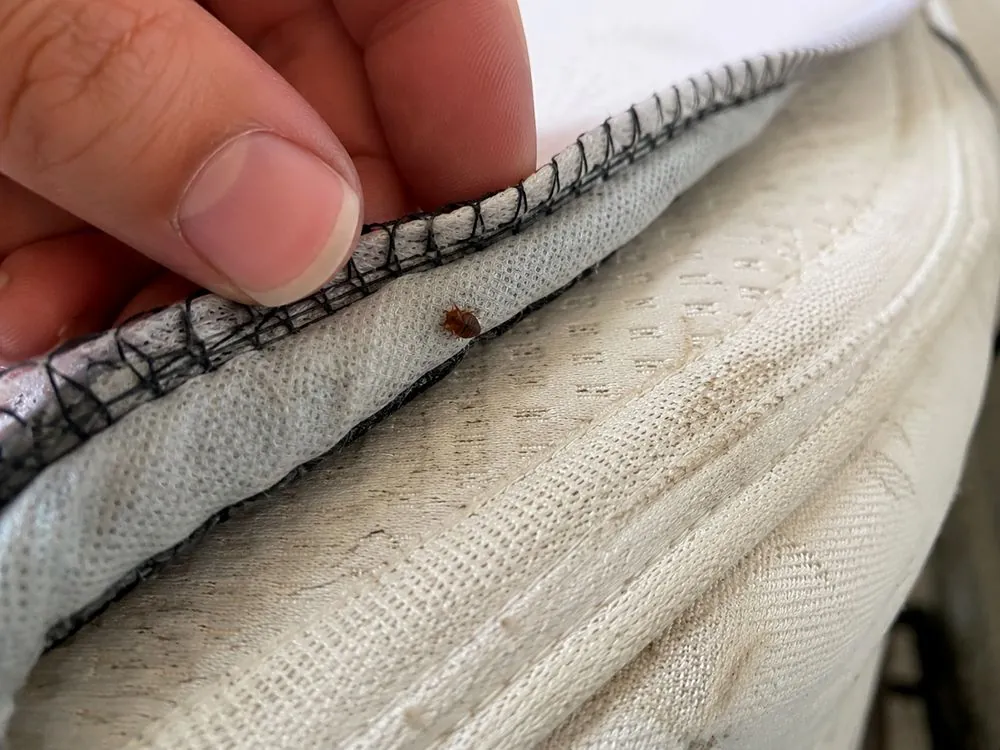
Diagnosis by phone
You tell us what you heard, saw or found — photos of droppings help. We tell you whether it sounds like rats or mice, floor or structure, what it costs and when we can come. The quote is free by phone or from photos; if a diagnostic visit is needed before any treatment, it is charged, and you know the price beforehand.
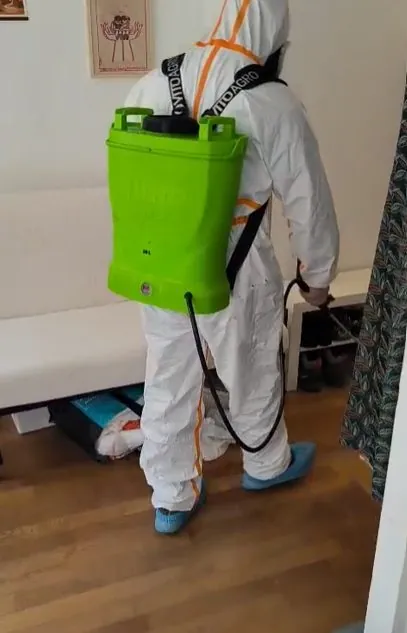
Inspection and treatment
Same visit: the technician maps the runs — torch, traces, smell, sound — finds the entry points, then treats: locked stations on the floor runs, injection in the structure, traps where products are not wanted. He explains what he is doing and why, in French or English.
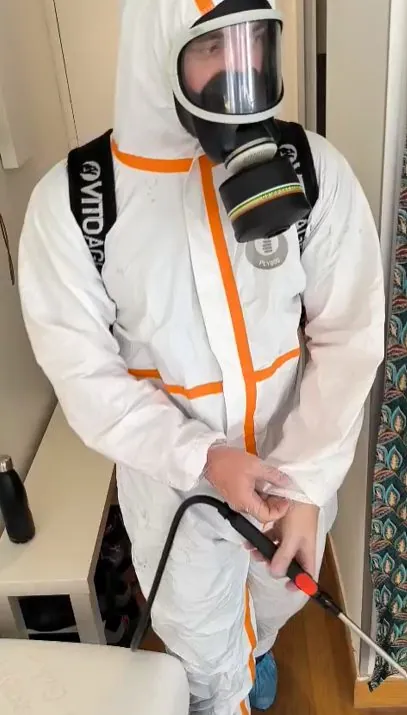
Written report and follow-up
A dated report in English: what was found, where the stations are, what was injected and where, what to seal, what to expect over the following days. Then a check-up visit to read the stations, confirm the activity has stopped and remove the products.
Six-month guarantee
After a treatment, you have six months to report any reappearance. If our technician confirms the presence of the pest during the check-up visit, an additional visit is carried out at no charge. Rats and mice: the commitment assumes that the recommendations handed over after the visit have been followed — in particular the sealing of the entry points shown by the technician and the food-storage advice. Reinfestation from an external source (neighbours, common parts, drains) is covered provided the treatment was carried out according to the protocol recommended by our technicians and validated in the quote. Applies in Paris and Île-de-France.
Before we come: leave the traces. Do not clean the droppings, do not move the furniture, do not put down supermarket poison: the traces are the map, and a badly placed bait makes animals wary of the professional stations that follow. Store open food in sealed containers, that is all. Take photos if you can.
Prices
How much does rodent control cost in Paris? From €150 — and what makes it vary
Rodent control in Paris and Île-de-France starts at €150. Unlike bed bugs, there is no flat price per apartment size, because the decisive factor is not how big the home is but where the animals run:
- Floor infestation — rats or mice along the walls, behind furniture, in the kitchen or the cellar: the price follows the surface and the number of zones to equip with secured stations.
- Structure infestation — animals inside partitions and above ceilings: injection is priced per linear metre, after the technician has mapped the runs. Nobody can quote that honestly from the street; that is why we ask you to describe what you hear.
The two coexist in most Paris flats, which is why the price is set case by case — and confirmed before the visit, with no addition on the day. A follow-up visit may be included according to the terms of your quote. For scale: the one-mouse apartment in Noisy-le-Sec above, stations plus contact product under the kitchen, came to €240.
What makes the price vary: the level of infestation (a recent presence is quick; a colony settled for months needs more stations and more metres — acting early is paying less); the layout (false ceilings, old building with service ducts, heavily furnished flat); private home or business (restaurants, food shops and hotels have hygiene and discretion constraints, quoted separately, often as a maintenance contract).
Home insurance? Almost never: standard French home insurance excludes pests. In a rental the question is settled by tenancy law rather than by insurance — see below.
Full price list, bed bugs and cockroaches included: our prices page (in French).
Who pays
Tenant, landlord or syndic — who pays for rat and mouse control in France?
It depends on where the animals are, and the rule is more favourable to tenants than most expats expect.
- Inside a rented apartment: usually the landlord. French tenancy law (loi du 6 juillet 1989, art. 6, as amended by the ELAN law of 2018) requires the landlord to provide a decent home, expressly « free of any infestation of pests and parasites ». A landlord can only shift the cost to the tenant by proving the tenant’s own negligence — an open bin for a week is not negligence, and mice entering through the structure of a 19th-century building are not the tenant’s doing.
- Common parts — cellars, courtyard, bin room, ducts: the syndic. The building’s managing agent must act, and the Règlement sanitaire départemental makes rodent control in private premises the owners’ obligation. Rats almost always fall here.
- Between several flats: a coordinated treatment. When mice circulate in the partitions of a whole staircase, treating one flat moves the problem next door. We regularly work for syndics and property managers on building-wide jobs.
- Furnished holiday rental or hotel: the host. Report it in writing, keep photos, and read the FAQ below.
Whatever your situation: document (dated photos of droppings, a note of when the noise started), notify your landlord or agency in writing (email; registered letter if they stall), and get a written quote. Ours can be issued in the landlord’s or the syndic‘s name, and the report and invoice come in English, so the conversation starts on facts. If the landlord does nothing, the commission départementale de conciliation is the free next step; we are not lawyers, but we can tell you what the report should contain.
Businesses, hosts and syndics
Restaurants, shops, offices, short-term rentals: discretion, traceability, maintenance contracts
A rodent seen by a customer, a guest or an inspector costs more than the treatment. For businesses we work on that basis: unmarked vehicles, early or late slots, locked stations numbered and mapped in the report, a treatment file you can show a hygiene inspection, and, where the building calls for it, a maintenance contract with scheduled visits — the way we already follow a school and its false ceilings. For short-term rental owners and concierge companies: a slot between two check-ins, nothing visible to the next guest, a dated report in English for the platform if a guest raised a claim. For syndics: a building-wide plan (cellars, bin rooms, ducts, then the flats that report activity), one contact, one report.
Where we work
Paris, the inner suburbs and Île-de-France — and the French Riviera
Our technicians are based in Les Lilas, on the eastern edge of Paris, and cover all twenty arrondissements — each has its own page, in French — the neighbouring towns of Seine-Saint-Denis (Les Lilas, Bagnolet, Pantin, Montreuil, Romainville, Le Pré-Saint-Gervais, Noisy-le-Sec, Bobigny) and the rest of Île-de-France. Our southern base covers Draguignan, Fréjus, Cannes, Nice and Monaco (pages in French).
Reviews
What our clients say
What clients say
★★★★★ 4.9/5 — 188 reviews on Google





“Fast and very effective. The technician was professional, competent and reassuring, and took the time to explain the situation.”
“Great service, discreet and careful work. Problem solved quickly, with good advice to stop it happening again.”
“Exemplary responsiveness, from the first call to the end of the visit. Effective and reassuring. Nothing to fault.”
“Very professional and punctual. You can feel the experience. I highly recommend them for any pest problem.”
“Punctual and pleasant — thank you for a reassuring and effective visit.”
“Fast and very effective. The technician was professional, competent and reassuring, and took the time to explain the situation.”
“Great service, discreet and careful work. Problem solved quickly, with good advice to stop it happening again.”
“Exemplary responsiveness, from the first call to the end of the visit. Effective and reassuring. Nothing to fault.”
“Very professional and punctual. You can feel the experience. I highly recommend them for any pest problem.”
“Punctual and pleasant — thank you for a reassuring and effective visit.”
16 questions English speakers ask Google about rodents in Paris
Rats and mice in Paris: your questions, answered
Are rats and mice common in Paris apartments?
How do I know whether I have rats or mice?
I hear scratching in the wall or above the ceiling at night — what is it?
What is the « 5-day mouse rule »?
Will mice go away on their own if I clean and store my food?
Will mice bother me while I sleep?
Can I buy rat or mouse poison in France?
Are mice and rats dangerous for my health?
How much does an exterminator cost for rats or mice in Paris?
Who pays for pest control in France — the tenant, the landlord or the building?
Is it normal to see little black boxes in Paris buildings and cellars?
Is the treatment safe for children and pets, and do I have to leave my apartment?
Will the mice come back after the treatment?
What should I do before the technician arrives?
I’m staying in an Airbnb or hotel in Paris and saw a mouse — what now?
Do you speak English, and can you provide a report and invoice in English for my landlord or syndic?
References
Official sources
The health and regulatory information on this page is drawn from institutional publications, consulted in September 2026. Anses, Proposal of criteria to restrict self-service sales of biocidal products (English): the Agency recommends discontinuing self-service sales of all rodenticides to the general public. Institut Pasteur, Leptospirosis: symptoms, treatment, prevention (English): transmitted from animals to humans via urine, main reservoir rats, usually mild but sometimes severe. Ville de Paris, Les rats à Paris, le saviez-vous ? (in French): integrated rodent control plan since 2017, more than 7,000 interventions a year on public land, owners’ obligation in private premises under the Règlement sanitaire départemental. Anses, technical note on the simultaneous control of Rattus rattus and Rattus norvegicus (in French, PDF). Tenancy law: loi n° 89-462 du 6 juillet 1989, art. 6, as amended by the ELAN law of 23 November 2018 — see the sources on our bed bug page.
Rats or mice in your Paris home? Tell us what you heard or found
A certified technician calls you back in English and comes as soon as possible — usually the same day in Paris and the inner suburbs. Free quote by phone or from your photos; six-month guarantee with the conditions above.
📞 +33 1 55 86 37 26Quick answer · No obligation · Same-day visits
Office Dératisation France · 33 Rue Jean Moulin, 93260 Les Lilas
01 55 86 37 26 · Paris · Île-de-France · SIREN 881 072 912 · RCS Bobigny